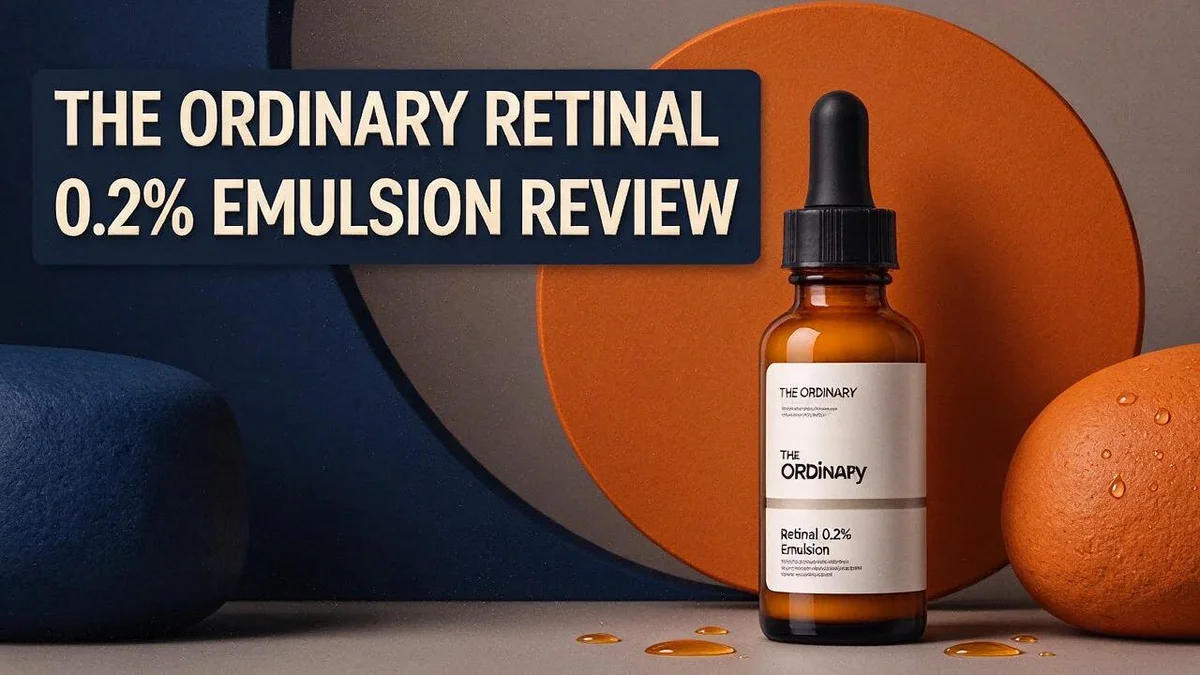
The Ordinary Retinal 0.2% Emulsion Review: Is This Worth It?
The Ordinary Retinal 0.2% Emulsion offers a gentler option. It uses stabilized retinaldehyde, a form of vitamin A that sits one step closer to the active form your skin uses.
This 15 ml nighttime emulsion targets fine lines, wrinkles, and signs of photo damage. The texture feels light and creamy. It absorbs easily.
Beginners and sensitive skin types often like it. Tone and texture improve over time. One Reddit user even found it more effective than The Ordinary’s retinol.
In this review, you will see how it performs, who should try it, and how it compares with rivals like Medik8 Crystal Retinal and The Inkey List Retinal Serum.
In a Nutshell
- Texture: The emulsion feels lightweight and creamy. It absorbs easily, so it layers well under a moisturizer.
- Active ingredient: It uses stabilized retinaldehyde. Your skin needs fewer conversion steps to use it than with standard retinol.
- Results: Users often notice better tone and smoother texture over time. Patience matters, because retinoids work slowly.
- User feedback: One Reddit user found it more effective than The Ordinary’s own retinol. That comment suggests it may suit people who felt stuck on retinol.
- Limits: The sources list no clear drawbacks. Some users still move up to adapalene once their skin adapts and they want stronger action.
- Alternatives: Other options in the same family include The Inkey List Advanced 0.2% Retinal Serum, The Ordinary Granactive Retinoid 2% Emulsion, and The Ordinary Retinol 0.2% in Squalane. Each one offers a slightly different feel and strength.
Key Ingredient: Stabilized Retinaldehyde Explained

- HIGH-STRENGTH RETINOID FORMULA: Retinal 0.2% Emulsion firms and smooths skin after 2 uses, reducing the appearance of dark spots, fine lines, and wrinkles.
- ADVANCED AGE SUPPORT: Targets common signs of aging, including crow’s feet, frown lines, forehead wrinkles, and uneven skin tone.

Last update on 2026-06-11 / Affiliate links / Images from Amazon Product Advertising API Some of the links on this website are affiliate links, which means that at no additional cost to you, I earn a commission if you click through and make a purchase. I only recommend products and services that I believe will add value to my readers. Thank you for your support!
Retinaldehyde is a form of vitamin A. Your skin turns it into retinoic acid, the active form that targets fine lines. The change takes only one step. Retinol needs two steps to reach the same point. This shorter path is why many people see retinaldehyde as a useful bridge between retinol and stronger options like adapalene.
Retinaldehyde breaks down quickly when exposed to air and light. That is why the word stabilized matters. A stable formula keeps the active ingredient working until you apply it.
The emulsion format adds another layer. It blends oil and water into a smooth base. This helps the active ingredient spread evenly across the face.
Start with a pea sized amount each night. Your skin may need time to adjust to any new active. Patience helps more than a bigger dose.
Use it only at night. Retinoids can make skin more sensitive to sunlight. Wear sunscreen every morning to protect your results.
Retinaldehyde also suits people who want a middle step. It works well if you have tried basic retinol and want a bit more action. Keep your routine simple while you learn.
Try a patch test first. Apply a small dab to the jaw for a few nights. Watch for redness, stinging, or peeling before using it on your full face.
Build up slowly over several weeks. Many people start with two or three nights each week. Then they add more nights as their skin feels comfortable.
Pair it with gentle, hydrating products. Look for ceramides or glycerin in your moisturizer. These support the skin barrier during the first few weeks while your skin adapts.
Stop using it if irritation lasts more than a few days. Your skin always comes first.
Texture and Application
Texture plays a big role in how this emulsion fits into a nightly routine. The formula glides across the skin with very little pull. It spreads into a thin film that feels smooth rather than sticky.
Once dry, the finish feels soft and slightly satiny. It does not leave a heavy layer on the face. Most people can wear a light lotion over it without any trouble.
Layering order matters here. Apply it to clean, dry skin for the best feel. Wait about a minute before you add a moisturizer. This gap lets the emulsion settle and helps prevent pilling.
Many people wonder if it works under makeup. Skip heavy foundation on the same night. Instead, cleanse thoroughly the next morning and let your skin breathe before makeup.
Spread the product with your fingertips, not a cloth. Warm it briefly between your palms. Then press it onto the forehead, cheeks, and chin. Use gentle upward strokes along the jaw. Avoid rubbing the delicate skin around the eyes.
Night routines work best when they stay simple. Pair the emulsion with a gentle cleanser and a plain moisturizer. Skip scrubs, peels, and strong acids on the same evening. Your skin needs time to adjust.
Morning sunscreen is essential. Vitamin A derivatives can leave skin more exposed to the sun. Choose a broad spectrum sunscreen every day, even on cloudy days.
Keep the cap closed after each use. Store the bottle somewhere cool and dry. Heat can change how the texture feels over time, so avoid leaving it in a sunny bathroom window.
Skin Types and Suitability
Beginners often find this emulsion a gentle starting point. It suits anyone who wants to try retinal without a harsh first step.
Sensitive skin can also benefit from this formula. The creamy texture feels calm on the face, so it may suit people who react easily to strong actives.
Dry skin often responds well to the emulsion format. The lightweight cream absorbs easily and leaves a soft, slightly satiny finish.
Oily skin can also work well. Because the texture feels light, it does not weigh the skin down. Watch for dryness during the first few weeks.
Mature skin is another good match. Many people choose retinal to reduce the look of fine lines, wrinkles, and photo damage.
Combination skin usually adapts well too. Use the emulsion on dry areas first, then watch how the oily zones respond.
Who should wait? People with active irritation, eczema flares, or broken skin should pause use. Calm the skin first, then try again.
Stop use if redness or stinging lasts more than a few days. A patch test is the safest first move. Apply a small dab to the jaw for several nights before full use.
Sun care matters for every skin type here. Vitamin A derivatives can leave skin more exposed to the sun, so daily sunscreen is essential in the morning.
Start slowly no matter your skin type. Use a pea sized amount each night and build up over several weeks.
Most people see gradual changes in tone and texture over time. Patience works better than fast results with this emulsion. Keep the cap closed after each use to protect the formula.
Top 3 Alternatives
Differin Gel

- TARGETS ACNE: Clears breakouts where they start (Deep in pores) and prevents new acne from forming, which ultimately restores skin's texture and tone
- CLEARS, TREATS & PREVENTS: Differin works differently than other Acne treatments by normalizing skin cell turnover and effectively targets two primary causes of Acne, clogged pores and inflammation
Last update on 2026-07-01 / Affiliate links / Images from Amazon Product Advertising API Some of the links on this website are affiliate links, which means that at no additional cost to you, I earn a commission if you click through and make a purchase. I only recommend products and services that I believe will add value to my readers. Thank you for your support!
Differin Gel is a popular choice for acne-prone skin. It contains adapalene, a retinoid that helps unclog pores and reduce breakouts. Many people also like how it improves uneven texture over time.
Start slowly for the best results. Apply a pea-sized amount at night on dry skin. Your skin may feel dry or flaky at first, so a light moisturizer helps.
La Roche-Posay Retinol B3

- La Roche-Posay Retinol B3 Serum reduces the appearance of fine lines, wrinkles, dark spots, and signs of sun damage while improving skin texture and tone. This transformative anti-aging serum leaves skin looking smoother, hydrated, and refreshed.
- Features pure & gradual release retinol, Vitamin B3 (niacinamide), and hyaluronic acid to renew & hydrate skin. Ideal for sensitive skin & retinol beginners, this anti-aging serum improves visible texture & softens the look of expression lines & sun spots
Last update on 2026-07-12 / Affiliate links / Images from Amazon Product Advertising API Some of the links on this website are affiliate links, which means that at no additional cost to you, I earn a commission if you click through and make a purchase. I only recommend products and services that I believe will add value to my readers. Thank you for your support!
La Roche-Posay Retinol B3 is a gentler option for sensitive skin. It pairs retinol with niacinamide, which can calm redness and support the skin barrier. This combination suits people who want to address fine lines without harsh peeling.
Use it at night after cleansing. Follow with a moisturizer and daily sunscreen. Patch test first if your skin reacts easily to new products.
Olay Retinol24

- OLAY REGENERIST, NEWLY UPGRADED: Now with Triple Collagen Peptide, this clinically-tested face cream for women provides deep hydration with Triple Collagen Peptide and Pro-Retinol, instantly renewing skin brightness for a youthful look. For a limited time, packaging may vary.
- PRO-LEVEL RESULTS WITHOUT ALL THAT IRRITATION: Before considering prescriptions, try this retinol night cream to visibly improve wrinkles in 1 week and improve dark spots in 4 weeks. No Prescriptions. No Downtime.
Last update on 2026-09-12 / Affiliate links / Images from Amazon Product Advertising API Some of the links on this website are affiliate links, which means that at no additional cost to you, I earn a commission if you click through and make a purchase. I only recommend products and services that I believe will add value to my readers. Thank you for your support!
Olay Retinol24 offers an easy way to start using retinol. It uses a slow release formula that delivers retinol to the skin over time. This can mean less irritation for beginners who are new to retinoids.
Apply it at night on clean, dry skin. Many users notice softer lines and a brighter look after several weeks. Consistent use matters most, so keep it part of your daily routine.
Results and Effectiveness Over Time
Results usually show up slowly. Most users notice small changes first. Skin may look a bit smoother in the morning, and makeup may sit more evenly on top.
In the first week or two, focus on comfort rather than results. Your skin is still adjusting to the vitamin A ingredient. A little dryness or flaking can happen, and that is normal.
Visible changes often take longer. Many people start to notice firmer looking skin and softer lines around week four to six. Clearer tone usually follows after that, so patience pays off.
Keep a simple photo log. Take pictures in the same light, at the same time of day, every two weeks. Side by side photos reveal changes that daily mirror checks can miss.
One Reddit user reported better results than with TO retinol. Still, every skin type responds in its own way. Your results depend on consistency, age, and sun habits.
Consistency beats intensity. Using the emulsion four nights a week can work better than using it every night and giving up after a few days. Skip a night when irritation appears, then resume gently.
Set a checkpoint at about twelve weeks. Write down how your skin looks and feels. If progress has stalled, your skin may be ready for a change. A dermatologist can help you decide whether a stronger option makes sense.
Keep your evening routine steady during this time. Changing many products at once makes it hard to know what caused a result. Small, steady steps give the clearest picture. Clear notes help you spot patterns too.
How to Add It to Your Nighttime Routine
Timing matters more than most people expect. Wait about ten minutes after cleansing so the skin feels fully dry. This gives the emulsion a clean surface to sink into.
Pick a spot in your routine that stays the same each night. Many people place it right after toner. The habit feels natural that way.
A small amount goes a long way. Use a small pea size drop for the whole face. Dab a little on the neck and jawline too. Keep it away from the eye area for now.
Try a patch test first. Apply a tiny dot on the inner arm or behind the ear for a few nights. This shows how your skin reacts before you use it all over.
Skip harsh scrubs and strong acids on the same night. Stacking exfoliants can make the skin feel tight or raw. Give the skin a calm night instead.
Finish with a rich moisturizer if your skin feels tight. Think of it as a cushion rather than a cover. Your skin will thank you in the morning.
Give it a few minutes before bed. Let the emulsion settle for a good while. This helps avoid pilling under your pillow and keeps your sheets cleaner.
Choose a pillowcase you do not mind. Silk or cotton works well for most people. Clean sheets each week help too.
Note how your skin feels in the morning. Write down any tightness, shine, or dryness. These small notes help you adjust the amount or the frequency.
Be patient with new habits. A routine takes a few weeks to feel normal. Small steps repeated each night build trust in the process.
Value for Money and Packaging
The bottle holds 15 ml. That size lets you test the formula first. Many people use it for several weeks before they decide if it suits them.
Gentle patting helps the formula sink in fast. This method also reduces waste left on your fingers.
The packaging keeps daily use simple. Store the bottle on a shelf away from heat and direct sunlight, which helps protect the formula. Keep it near your sink so it becomes part of your evening habit.
Think about how this fits with other products. It sits alongside other retinal and retinoid options from The Ordinary.
These include Retinol 0.2% in Squalane and Granactive Retinoid 2% Emulsion. Each one offers a different texture and strength, so you can choose what suits your skin.
Competitors like Medik8 Crystal Retinal and The Inkey List Advanced 0.2% Retinal Serum target similar goals. Comparing their packaging and size can help you decide. Look for a format that matches your routine and your bathroom space.
Shoppers often look at the bottle first. A clear label lists the strength and key details, so you know what you are getting.
Adapalene is another option, and reports call it stronger. Many readers wait until they feel comfortable with this emulsion before switching. A simple plan keeps your skin calm and your choices clear.
Overall, the packaging supports a steady routine. The 15 ml size encourages testing, and the format keeps nightly use easy. Check the label for the 0.2% strength before you buy. Good packaging makes the routine feel easier.
Pros and Cons
Pros
- Lightweight and creamy, and it absorbs easily into the skin.
- Suited to beginners and people with sensitive skin.
- Helps improve tone and texture over time.
- One Reddit user reported better results than with TO retinol.
- The 15 ml bottle lets you test the formula first.
Cons
- No explicit drawbacks appear in the research sources.
- It is positioned for nighttime use only, so morning routines need another product.
- Adapalene is cited as a stronger option for those who want more power.
Who Should Buy It
Some readers will get the most from this emulsion. It suits people who want a gentle entry into retinoids. Starting slow gives the skin time to adjust.
Adults who notice early signs of photo damage often find it useful. The formula is marketed for smoothing lines and wrinkles. Results build slowly, so patience matters.
People with dull or uneven skin may also like this option. Regular nightly use may help the complexion look more even over several months. It is not a quick fix, so realistic expectations help.
Shoppers who already own a basic cleanser and moisturizer are good candidates. The emulsion fits into a short three step routine. Fewer products make it easier to spot changes.
Those who enjoy a simple skincare ritual will likely stick with it. Applying one small drop each night can feel calming. Consistency often matters more than the product itself.
Readers who like tracking progress with photos can also benefit. Taking one picture each month reveals small changes that daily mirror checks might miss.
Some people should look elsewhere. The emulsion does not replace daytime sunscreen, so it suits people who already wear sun protection every morning.
Those who want instant results may feel disappointed. Retinal works gradually, so it rewards steady habits. Quick fixes are not its strength.
Pregnant or breastfeeding readers should speak with a doctor before starting any retinoid.
People with eczema, rosacea, or other sensitive conditions should also ask a dermatologist first. Medical advice always comes first.
Overall, this emulsion works best for patient beginners who wear sunscreen daily.
Final Verdict
The Ordinary Retinal 0.2% Emulsion earns a confident recommendation. It gives you a gentle way to try retinal without a big leap. The formula feels friendly, and the results build steadily.
Retinal sits in a useful middle spot. It works faster than many standard retinol products. It still feels kinder than prescription options.
That balance makes this emulsion a smart pick for your first retinaldehyde product. It also suits anyone who wants a calm upgrade from a basic retinol.
Start slowly for the best outcome. Use it two nights a week at first. Add a night every couple of weeks as your skin adjusts.
Patch test a small area before your first full application. This simple step helps you spot trouble early.
Sunscreen matters every single morning. Retinoids make skin more sensitive to light. A daily SPF protects your progress and prevents new damage.
Pair the emulsion with a plain moisturizer to cushion your skin. Skip other strong actives, such as exfoliating acids, on the same night. This keeps irritation low and results steady.
Give the formula time to work. Most people need about twelve weeks to see clear changes in lines, tone, and texture. Early dryness or flaking can happen, and it usually settles down.
Our final rating: a strong 4.5 out of 5. The formula delivers on its promise, and it keeps things simple. It misses a perfect score only because experienced retinoid users may want more power.
If you want a reliable nighttime retinal that treats your skin kindly, this one deserves a place on your shelf. Stay patient, stay consistent, and let the results speak for themselves.
Frequently Asked Questions
How long does it take to see results?
Most people need about twelve weeks of steady use. Skin renews slowly, so changes appear gradually. Give the formula time before you decide.
Can I use vitamin C with it?
Yes, you can use vitamin C in the morning. Apply it before sunscreen and save the emulsion for nighttime. This split routine keeps your strongest products apart.
Should I mix it with acids or scrubs?
Avoid layering it with strong acids or exfoliants on the same night. Doubling up can irritate your skin. Use one active product per night until your skin feels settled.
What if my skin feels dry or flaky?
Mild dryness is common in the first few weeks. Use the emulsion less often for a while. Add a thicker moisturizer and try again once your skin calms down.
Can I apply it to my neck or hands?
Many people apply a thin layer to the neck and hands too. Skip the eye area unless you use an eye product made for that spot.

Hi, I’m Hazel Claire, the voice behind Modern Lens Blog, where I dive deep into the world of Amazon products across every niche imaginable. As a passionate product reviewer and everyday consumer, I test and evaluate everything from tech gadgets to home essentials, beauty products to fitness gear, bringing you honest, first-person insights that matter.